Navigating the Digital Maze: From Prompts to Outputs: Safeguarding Interests in Generative AI Agreements

Some Thoughts on Generative AI Best Practices…

  • Understand Generative AI:
    • Recognize that generative AI identifies patterns in training data to produce new content based on user prompts.
    • Assess the balance between the vast potential and risks of using generative AI tools.
      ..
  • Contractual Clarity:
    • Always ensure your use of a generative AI tool is under a clear agreement. Avoid tools without explicit terms.
    • Consider “enterprise” or “business” versions which might have more favorable terms.
    • Be aware of different service categories, such as plugins or APIs, which might have distinct terms.
      ..
  • Rights in Prompts:
    • Confirm who retains ownership rights of prompts submitted to the AI.
    • Be cautious of terms that grant providers rights to use, modify, or distribute prompts, especially if they can use them as training data.
    • Educate employees and contractors about the risks associated with submitting confidential or proprietary data in prompts.
      ..
  • Rights in Outputs:
    • Verify ownership rights of the outputs generated by the AI.
    • Ensure providers don’t have undue rights to use, distribute, or modify outputs, especially for valuable intellectual property.
      ..
  • Confidentiality Measures:
    • Ascertain if the AI provider is subject to any confidentiality obligations regarding your prompts or outputs.
    • Avoid breaching third-party confidential agreements or privacy laws by inadvertently sharing data with AI providers.
    • Implement a comprehensive generative AI use policy to protect sensitive company information.
      ..
  • Indemnities:
    • Understand the indemnification terms. Some providers may offer indemnification against third-party intellectual property claims, while others might not.
    • Be cautious of terms that place broad indemnity obligations on end users.
      ..
  • Limitations of Liability:
    • Recognize that many AI providers limit or disclaim liability, especially for indirect damages.
    • Consider enterprise or business account options that might provide more favorable liability terms.
      ..
  • Holistic Evaluation:
    • Conduct a comprehensive assessment of both the technical and legal risks associated with generative AI tools.
    • Weigh the benefits against the legal risks, and consider if providers offer more favorable tool versions or contractual terms.

Ed Note: This is not legal advice, I am not a lawyer (hire one!) – Just pointing out areas to investigate. 🙂

Laziness as a Driver in AI: The Interplay of Nudging and Boosting

Nudging, Boosting, and Self-Nudging

Behavioral science interventions, with their diverse nature, can be classified in various ways, such as through UCL’s Behaviour Change Technique Ontology. A defining characteristic is the degree of individual autonomy or agency during behavior change.

The concept of a “nudge” is to subtly alter choice architecture, gently guiding individuals toward certain behaviors. For instance, reframing nurses’ handwashing practices as an act of patient care rather than a compliance task can be seen as a nudge.

These nudges, while effective initially, often need repetition, mirroring how AI systems require ongoing nudges for optimization. This similarity between human and AI behavior can be attributed to an inherent “laziness” or a tendency toward efficiency.

How many times have your generated a script with AI help and the AI just tosses in placeholder code.  “#The rest of your code here” and you have to prompt it to provide the full text. Over and over,  just plain lazy.

Conversely, “boosts” aim to empower individuals with actionable competencies. In the context of nursing, a boost might make the risks of unwashed hands more tangible, translating abstract percentages into more relatable frequencies. These boosts, similar to enhancing AI with comprehensive data or refined algorithms, grant more autonomy and efficiency. Yet, both humans and AI can exhibit a form of “laziness” when over-relying on certain competencies, leading to potential stagnation.

While boosts hold promise, they are particularly effective for individuals with ambiguous or conflicting goals. Nudging such individuals might be ethically complex. Moreover, in “toxic choice environments” – where certain setups are tailored to manipulate choices, such as some fast-food chains or AI-driven platforms – boosting serves as a countermeasure, helping individuals navigate and resist undue influences.

It’s crucial to recognize that nudges and boosts aren’t antagonistic but can synergize. A reminder (a nudge) might prompt the application of a learned skill (a boost). An example includes a ribbon on a car door nudging individuals to use the Dutch Reach technique.

Furthermore, the advent of “self-nudges” allows individuals to tailor their decision-making environments. This empowerment, reminiscent of equipping AI with adaptive learning capabilities, underscores the significance of autonomy and ongoing growth.

This underlying theme of laziness, draws notable parallels between human decision-making and AI system optimization.  Often it is what is needed to get to the finish line. –  This leads to a larger story on reliability and true enterprise utility.


(ed note – AI helped with the examples used in this post, removed a totally unrelated paragraph that ended up in this post)

AI Training data and video conference software

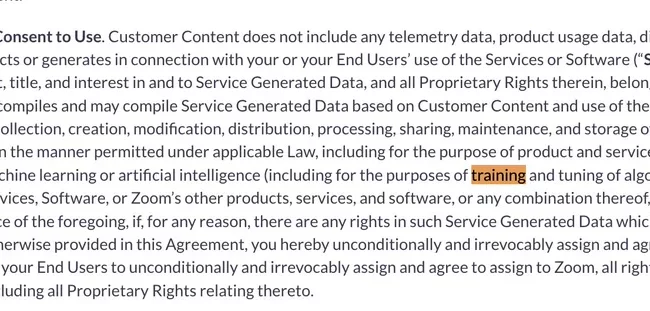
“Just a heads up, Zoom terms now allow training AI on user content with no opt out. (Technically, you can delete your data later, but the training has been done.)

My framing of Zoom has always been: ‘dangerous data collection software posing as a video conferencing service.’

Over the last few years, maintaining any kind of PII operational security has been an intractable problem. Even if you lock down your basic best practices online, it’s only one vector.

My desk has a stack of letters from companies who have been exploited from medical, including biometric data, to financial information – all offering free credit reports. Get your free credit report. Right now, I have enough free credit reporting to last three lifetimes.

The market does not really move forward until users have agency over their own data. AI is blowing through that opportunity moment right now with centralized services and data training and collection vs at the local level, but that’s a long post and another story.

Do not use this service with sensitive information. Business, institutes of higher learning, medical, and therapy, etc. This means you.”

https://explore.zoom.us/en/terms/

Challenges and Considerations in AI Service Pricing and Adoption

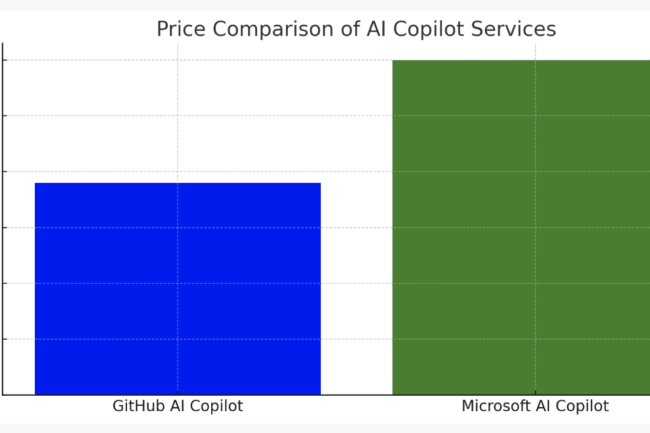
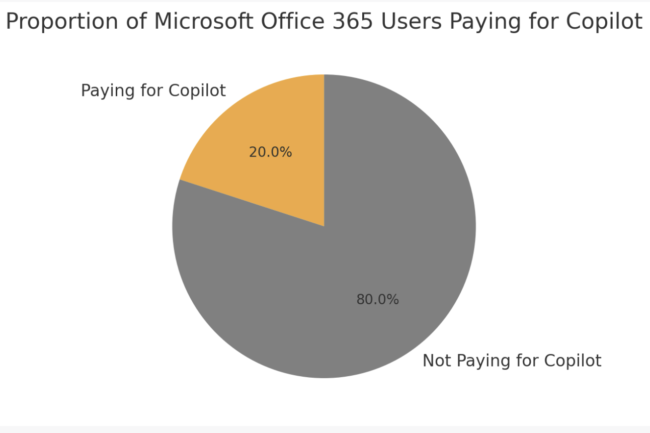
If you are running an AI service, whether large or small, one must address the nexus of the high compute costs and the expensive nature of providing such offerings. Companies like Microsoft and GitHub have responded to this challenge by introducing AI Copilot services at various price points, catering to consumer demand. The key question is whether consumers perceive AI as a mere productivity enhancement or an essential service.

Potential Revenue Growth and Pricing Model: Successfully portraying AI as indispensable opens the door to significant revenue growth. However, the current pricing model, relying on recurring revenue from flat-rate fees, may require reevaluation as adoption rates rise.

Indispensable Features of AI Services: To be considered indispensable, AI services must deliver the following key aspects:

  •  Easy updating of factual knowledge.
  •  Providing truthful outputs with proper and complete attribution.
  •  Ensuring reliable control of dialogue.
  •  Ensuring reliable control of social and ethical appropriateness.

Assuming the AI services can deliver the indispensable features outlined above, the industry is not there yet. A shift towards a per-usage payment model could become necessary to manage compute costs and maintain profitability.
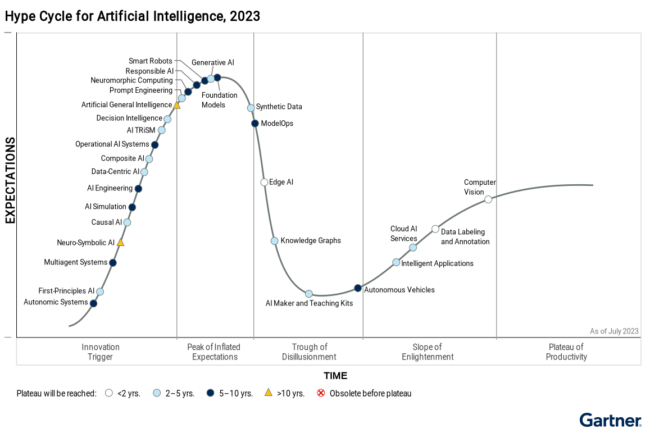
Long-term success in the AI market will depend on striking the right balance between pricing, consumer perception, and service delivery.


Companies need to address the challenges posed by high compute costs while convincing consumers of AI’s essential role beyond mere productivity enhancement. Establishing AI services as indispensable is the challenge , the win = significant revenue growth.

B&C Networks

In another timeline we would guide to an upcoming media m&a landscape.
That implies demand. If what Iger, Redstone and others are saying now
come to manifest there will be a lot of networks up for grabs with few suitors.

Couple that with a crippling actor and writer strike and you have the equivalent
of thousand year storm in broadcast and cable.

The landscape starts to look like a fire sale.  I did a rough projection just looking
at a few stakeholders and being conservative….

Links from early surf set