US Gov officials create searchable national citizenship database. Homeland security and Doge merge immigration data with social security to create index it claims will stop voter fraud.

US Gov officials create searchable national citizenship database. Homeland security and Doge merge immigration data with social security to create index it claims will stop voter fraud.
Turnstile – “I CARE”
https://www.youtube.com/watch?v=PnYzk4nsJAo
Big Thief – “Incomprehensible”
https://www.youtube.com/watch?v=nSqYsmmfbCI
El Michels Affair & Clairo – “Anticipate”
https://www.youtube.com/watch?v=m8BYnNpHze0
Ethel Cain – “Nettles”
https://www.youtube.com/watch?v=sP0us82q1ck
Glass Kinsman – “If The Sun Don’t Shine”
https://www.youtube.com/watch?v=_gLNpRDxsHs
Based in published playlists – this is an unofficial, unapproved and incomplete, but the best you are going to get chart ** (ed : note not all DJ’s on the NAS publish their playlists)
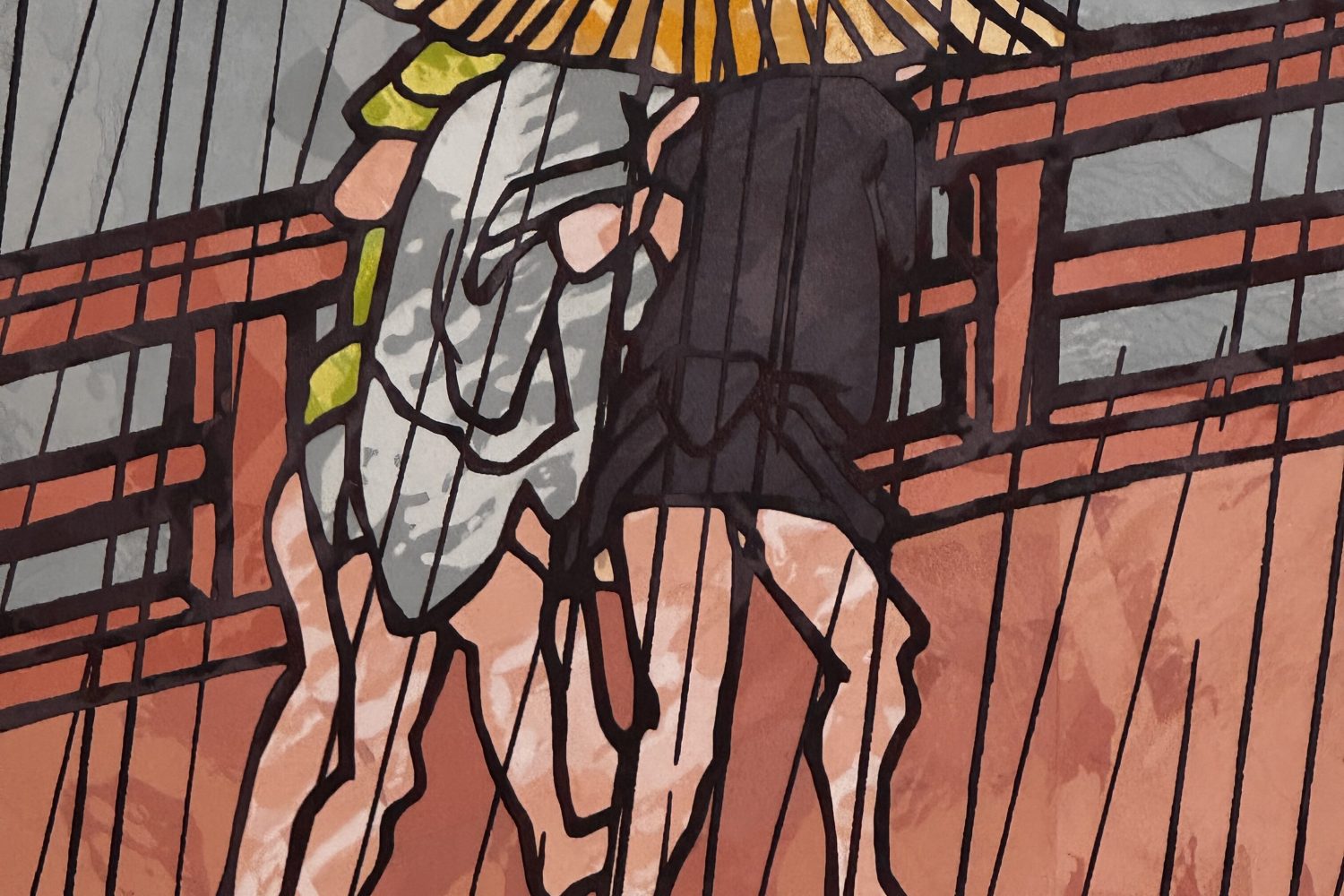
In an age of technological complexity, global interdependence, and ideological polarization, humanity seems increasingly at odds with its own nature. The phrase “humans are having problems with humans being humans” captures a paradox that at its core lies the tension between the deeply rooted behavioral patterns shaped by evolution and the rapidly changing sociocultural environments we now live in.
Anthropology teaches us that human behavior is shaped by a combination of biological predispositions and cultural frameworks. For eons, humans survived in small, kin-based groups where cooperation, in-group loyalty, and face-to-face communication were vital.
Evolutionary legacies—such as tribalism, reciprocity, and even suspicion of the “other”—were adaptive in prehistoric contexts but often clash with the demands of modern, pluralistic societies. (Becasue internet), globalization, urbanization, and digital communication have expanded our social worlds beyond what our cognitive wiring can easily accommodate. The result, many of the instincts that once ensured group survival now manifest as prejudice, xenophobia, and hyper-polarization.
Simultaneously, culture evolves faster than biology. (Just like technology and legislation and regulation) What we consider moral, rational, or acceptable shifts from one generation to the next, and from one culture to another. Yet this fluidity in Overton window is often perceived as instability or threat. They are different oh my!, oh my!
Social media amplifies these tensions, exposing people to a flood of norms, identities, and values that may conflict with their own. The result is a widespread anxiety—both individual and collective—about what it means to be human in a world of accelerating change.
Add on top of all of this the emphasis on individualism and personal freedom can conflict with communal values that anthropologists observe in many traditional societies. The expectation that people should self-actualize, optimize, and constantly perform can feel dehumanizing, leading to alienation and resentment.
The Irony, it is often our efforts to rise above our basic human tendencies—toward bias, emotional reactivity, or mortality—that create friction and discontent.
Anthropology reminds us that to understand the “problem” of humans being humans, we must first accept that many behaviors we now critique—irrationality, conflict, identity-seeking—are not aberrations but base parts of our species story. They require management, not denial. The key may not lie in suppressing human tendencies, but in cultivating social systems that channel them constructively, respecting both our shared nature and our cultural differences.
Humans are struggling not because something has gone wrong, but because being human has always been errr.. complicated. The challenge is to build societies that can create space for the full spectrum of human behavior—messy, emotional, irrational, yet capable of empathy, adaptation, and meaning-making.
Started Compiling My Own Charts
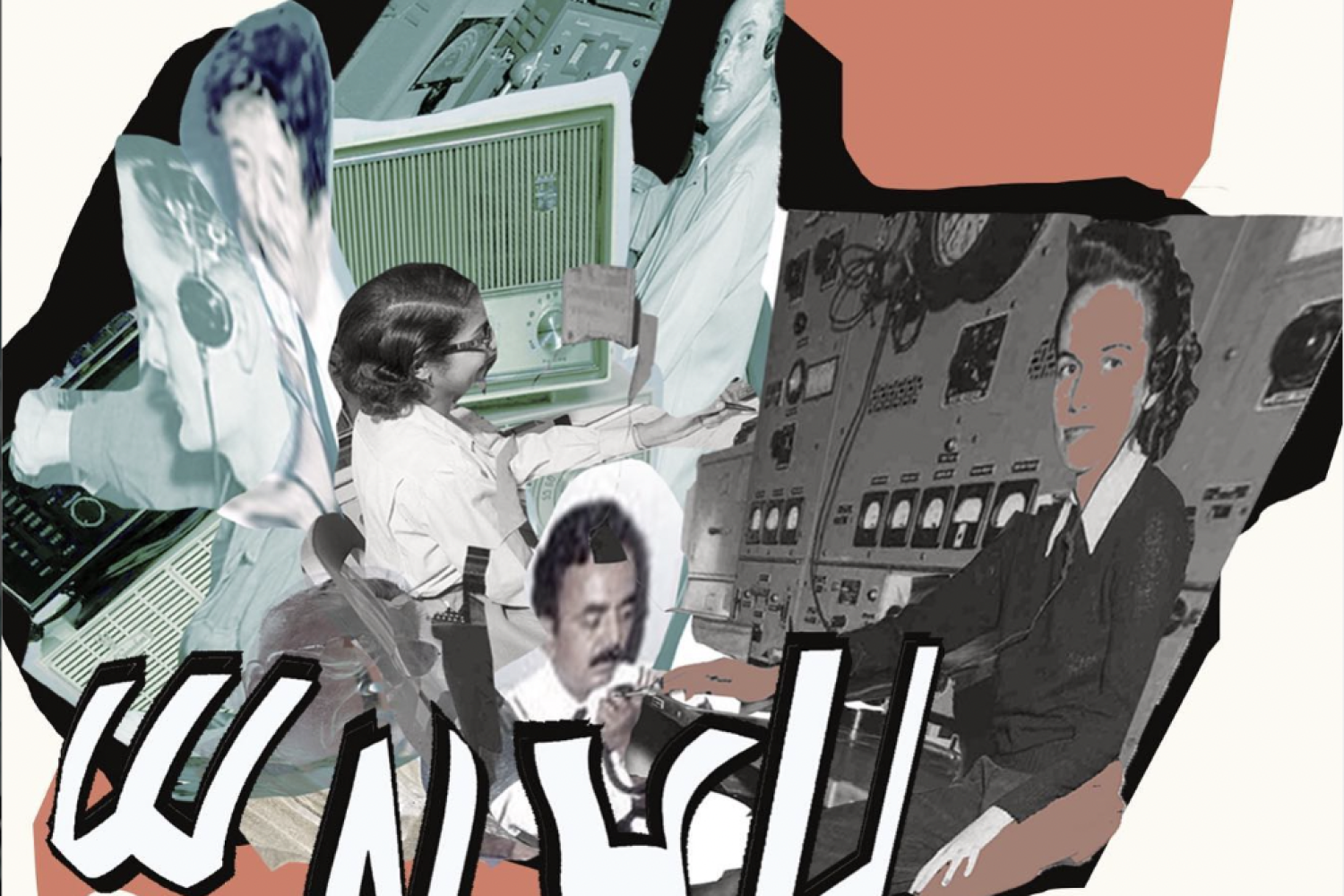
For decades, WNYU’s New Afternoon Show (NAS) has been one of the best radio programs in the country. Unfortunately, it’s been years since they’ve released any charts, and the published playlists have become inconsistent.
—charts matter.
They help shape the conversation around music. They’re a tool for organizing what’s new and highlighting what deserves attention. This chart is my attempt to fill that gap. I’m posting it now so I can return in a year and see where these bands ended up. It’s disappointing that the station does not see the value in this. This is how we lose the zeitgeist, and fail to step into to it before it disappears. I will try and do June at the EOM.



Dayvan Cowboy (Odd Nosdam Remix) is a melancholic song by Boards of Canada with a tempo of 78 BPM. It can also be used double-time at 156 BPM. The track runs 9 minutes and 19 seconds long with a B key and a major mode. Have always rocked this at 33 who knew you double it. So good.
AI Changes Everything
https://lucumr.pocoo.org/2025/6/4/changes/
My AI Skeptic Friends Are All Nuts
https://fly.io/blog/youre-all-nuts/
Broadcast Box
https://github.com/Glimesh/broadcast-box?tab=readme-ov-file#what-is-broadcast-box
Mozilla: Meta’s AI Feed is Too Invasive
https://www.mozillafoundation.org/en/campaigns/meta-shut-down-your-invasive-ai-discover-feed-now/
OpenAI Faces Court-Ordered Log Retention
https://arstechnica.com/tech-policy/2025/06/openai-confronts-user-panic-over-court-ordered-retention-of-chatgpt-logs/
Copyright and AI: Washington Is Paying Attention
https://www.washingtonpost.com/politics/2025/06/05/tech-brief-ai-copyright-report/
CommonPile: A Shared Resource for Training Data
https://github.com/r-three/common-pile/blob/main/paper.pdf
The rush to outputs diminishes intentionality in creative works and reduces opportunities for the serendipitous discoveries that often occur during dev.

“There are some people who are, like, ‘all AI art is terrible’, but then there’s a lot of artists who are, like, ‘this is the best tool ever, it’s like the invention of the camera’,” says Altman. “We agree we need a new business model for this kind of a world, but what it is, the community is still sort of feeling their way through. I know that we’ve got to converge on what it should be.” https://www.ft.com/content/a3d65804-1cf3-4d67-ac79-9b78a10b6dcc
A core problem is that AI models often train on vast amounts of copyrighted data, inherently violating copyright and facilitating the theft of creative work. While copyright historically emerged to protect creators’ livelihoods, capitalist forces can exploit this system, and AI is now viewed as a tool to devalue human labor for profit. The author emphasizes the unique meaning and emotional resonance of human creation, which AI lacks. Consequently, copyright is presented as a vital, albeit imperfect, current defense against AI’s wholesale appropriation of creative content and the exploitative practices it could entrench, even while acknowledging the need for fairer systems for creators. https://docseuss.medium.com/copyright-rules-ai-drools-and-plagiarism-is-for-suckers-who-have-no-soul-0b3c74eba0a8
Music publishers file amended lawsuit against AI firm Anthropic, which they say ‘bolsters the case’ over company’s ‘unauthorized use of song lyrics…”ibly. But Anthropic violates these principles on a systematic and widespread basis. Anthropic must abide by well-established copyright laws, just as countless other technology companies regularly do” https://www.musicbusinessworldwide.com/files/2025/05/UMG-et-al-first-amended-complaint-1.pdf
Copyright and Artificial Intelligence Part 3: Generative AI Training pre-publication version A REPORT of the register of copyrights may 2025 https://www.copyright.gov/ai/Copyright-and-Artificial-Intelligence-Part-3-Generative-AI-Training-Report-Pre-Publication-Version.pdf
The office’s opinion on fair use came in a draft of the third part of its report on copyright and artificial intelligence. The first part considered digital replicas and the second tackled whether it is possible to copyright the output of generative AI. The office published the draft [PDF above] of Part 3, which addresses the use of copyrighted works in the development of generative AI systems, https://www.theregister.com/2025/05/12/us_copyright_office_ai_copyright/
“The firing of Register of Copyrights Shira Perlmutter came after Perlmutter and her office earlier this week issued part three of a lengthy report about artificial intelligence and expressed some concerns and questions about the usage of copyrighted materials by AI technology.” https://www.cbsnews.com/news/trump-fires-director-of-u-s-copyright-office-shira-perlmutter-sources/
Slate Auto
https://www.slate.auto/
Project Kuiper
https://www.aboutamazon.com/what-we-do/devices-services/project-kuiper
LLMs and World Models, Part 2 Evidence For (and Against) Emergent World Models in LLMs https://aiguide.substack.com/p/llms-and-world-models-part-2
Figma’s 2025 AI report: Perspectives from designers and developers
https://www.figma.com/blog/figma-2025-ai-report-perspectives/
Generative AI is not replacing jobs or hurting wages at all, say economists
https://papers.ssrn.com/sol3/papers.cfm?abstract_id=5219933