Mediaeater Digest Vol.30, No. 203

Gutenberg’s message to the AI era  (Brookings) A second effect of AI is its expansion of already existent digital era abuses, such as privacy, competition, truth, and online safety. We have already lived through the exploitation of digital information to manipulate individuals and markets.

Inside the fight over California’s new AI bill  (Vox) The shutdown provision requirement [a provision in the bill that requires model developers to have the capability to enact a full shutdown of a covered model, to be able to “unplug it” if things go south] was very high on the list of what person after person was concerned about

Academic authors ‘shocked’ after Taylor & Francis sells access to their research to Microsoft AI The Bookseller asked Taylor & Francis if it was possible to opt out and requested clarification over whether authors had been told about the AI deal. The publisher’s spokesman said he couldn’t comment further. 


Mediaeater Digest Vol.30, No.195

A change log for significant digital events and their drivers. 

-ATT Breach :Nearly all  ATT customers’ text & call records breached this has to be top 3 in US hexor history,  2022 hack was not revealed until now and after they copped an DOJ exception.  Criminals and nation states now have NSA-level view into Americans’ lives.  || American Hacker in Turkey Linked to Massive AT&T Breach. – Toll of Snowflake Hack Widens related to Ticketmaster and other exploited and exposed business.  /Noteworthy here: AT&T received a National Security Exception from DOJ under the SEC Reporting Requirements. First such exception I’m aware of.  (CKrebs)

-The full and final text of the EU AI Act, the European Union’s landmark risk-based regulation for applications of artificial intelligence, has been published in the bloc’s Official Journal.

-The Content Origin Protection and Integrity from Edited and Deepfaked Media Act (COPIED Act), Ec. 4. Facilitation of development of standards for content provenance information and detection of synthetic content and synthetically-modified content. (a) In general.—The Under Secretary shall establish a public-private partnership to facilitate the development of standards regarding content provenance information technologies and the detection of synthetic content and synthetically-modified content, including with respect to the following: (1) Facilitating the development of guidelines and voluntary, consensus-based standards and best practices for: – Watermarking, Content provenance information, Synthetic content and synthetically-modified content detection, including for: • Images  • Audio • Video  • Text  • Multimodal content – The use of data to train artificial intelligence systems Such other matters relating to transparency of synthetic media as the Under Secretary considers appropriate.  (standards not law -ed)

RIP : Bill Viola, pioneer video artist who explored nature of human consciousness, dies at 73 (LAT) Bill Viola.com

Tools To Write A Better Future (con’t)

I was reading Robin Sloan’s new book Moonbound and came across this text which speaks to writing ourselves a better future. 

Durga laughed. “What I mean is—we have minds! We dream, and we plan, and then we take action. For that reason, our present is a function of the future we imagine. It is forged in response to vision. If we lack vision—well, then the ghosts will play, and that is our own fault.”


Self fulfilling text that generates a better future


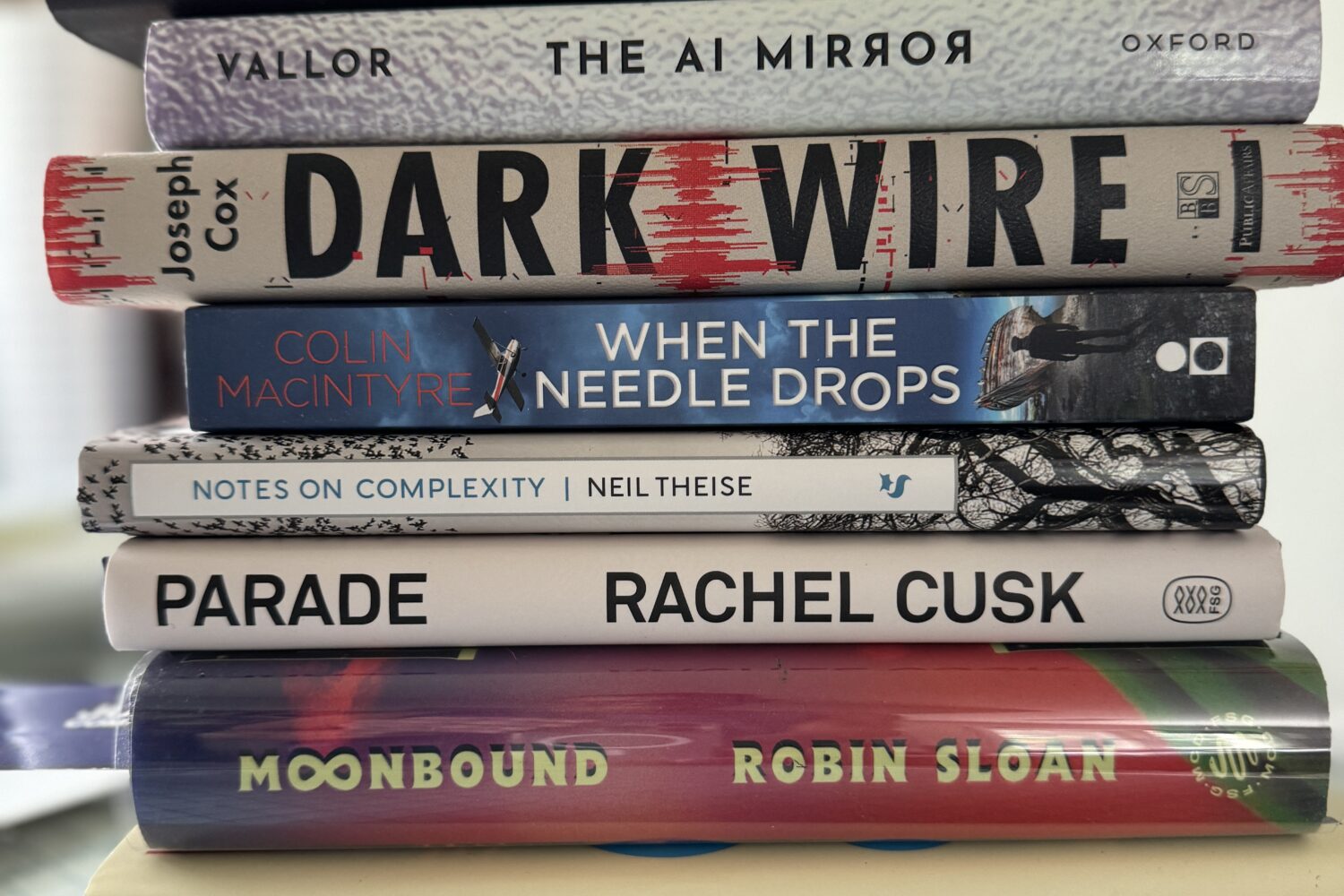
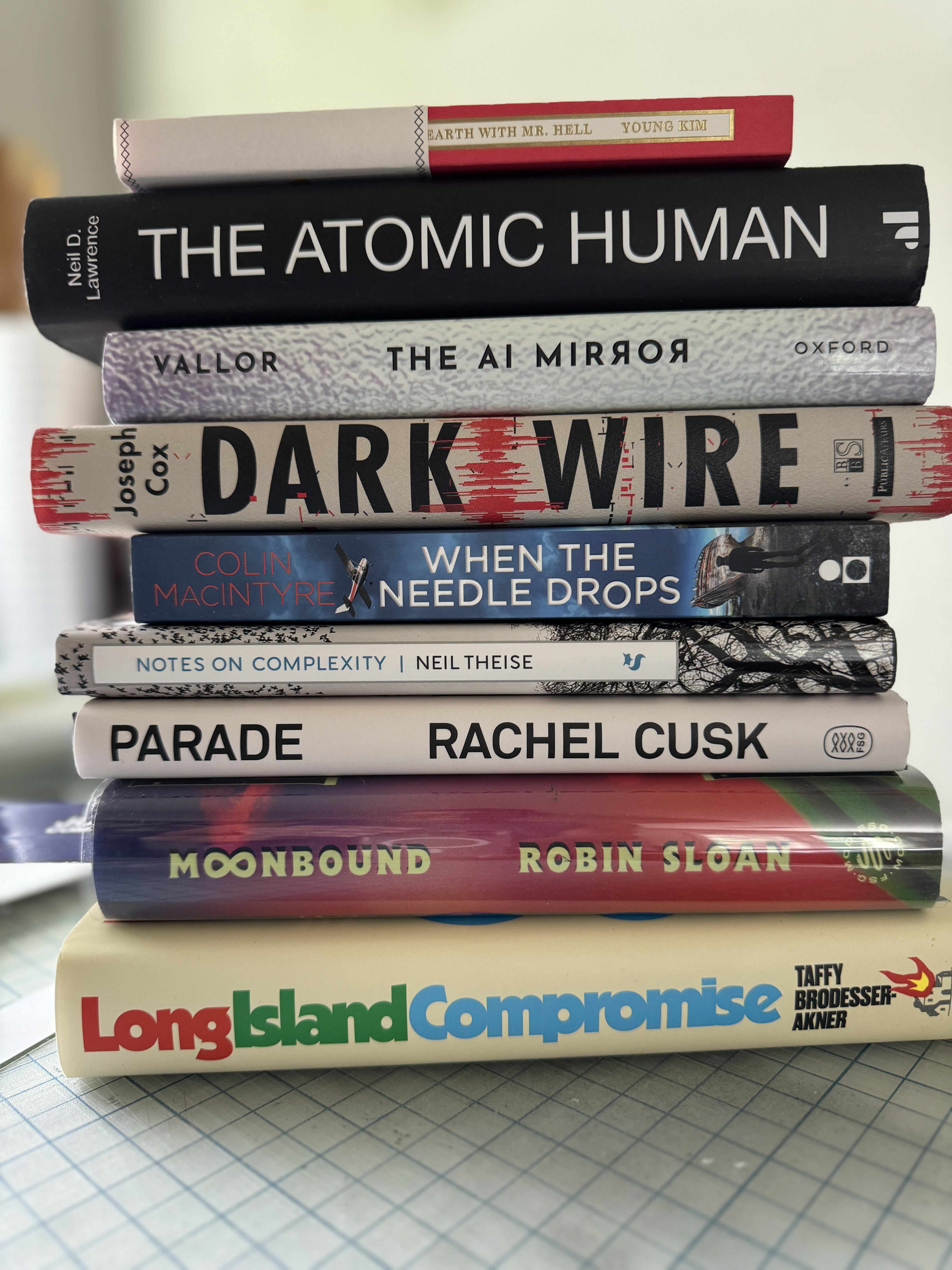
Summer Reading (con’t)

  • A Year on Earth with Mr. Hell: by Young Kim
  • The Atomic Human by Neil D. Lawrence
  • The AI Mirror by Vallor (published by Oxford)
  • Dark Wire by Joseph Cox
  • When the Needle Drops by Colin MacIntyre
  • Notes on Complexity by Neil Theise
  • Parade by Rachel Cusk
  • Moonbound by Robin Sloan
  • Long Island Compromise by Taffy Brodesser-Akner


Not AI
Not AI

Mediaeater Digest Vol.30, No.185 (video editing tools)

AI, Synthetic Data & Media

Transcript: Robo DJ — YouTube invests in AI-generated music (ft) “So YouTube is trying to make it bigger and make it a proper product. It’s about kind of enticing people to Shorts and making them want to stay there and watch videos there and make videos for Shorts. They have recently kind of come to these big music coming in and said, what if we just pay you, you know, a lump sum of money in exchange for bringing more of your artist into this and allowing more of their music to be used to train our AI. ”   (“lump sum”  -ed)

Instagram’s ‘Made with AI’ label swapped out for ‘AI info’ after photographers’ complaints  (verge) “Made with AI” label to “AI info”.  While YouTube has added reporting and context feedback

AI’s Brain Fog Won’t Stop a Reckoning for the Arts  (bloomberg) It will take a few more years for banks and health-care firms to solve AI’s hallucination problem, but creative industries already face some harsh disruptions.  (My mantra the last two years -ed)

Brazil data regulator bans Meta from mining data to train AI models (apnews) The decision stems from “the imminent risk of serious and irreparable or difficult-to-repair damage to the fundamental rights of the affected data subjects,” the agency said in the nation’s official gazette.

Why GPS Is Under Attack  (nyt) The American GPS network that was once the gold standard is at risk of becoming a relic as Chinese, Russian and European systems modernize.

AI washing: Silicon Valley’s big new lie (mikeelgen) The cumulative effect of AI washing is that it leads both the public and the technology industry astray. It fuels the delusion that AI can do things it cannot do. It makes people think AI is some kind of all-purpose solution to every problem — or a slippery slope into dystopia, depending on one’s worldview.

SoftBank to prioritise AI deals over share buybacks despite pressure from Elliott (ft) – Ed note: 2019 SoftBank owned 4.9% of Nvidia and sold it all for a $3.3B profit (todays value would have been 160B)

Provenance

The Fairchain platform will be closing, effective August 1.  (fairchain)  All records and documentation stored on Fairchain will remain accessible for existing clients until this date, including certificates of title for artworks and sales contracts, the terms of which will continue to be upheld. Effective immediately, no new accounts will be able to be created on the platform.   (yada yada yada block chain artists yada- ed)

Video Editing Tools 

Runway   Gen-3 Alpha:    text-to-video model

pikimov.com This non AI video editor is open, web based and never once asked me to login. I am in shock. This is the lesson for every startup out there – every time users hit a speed bump they hit next and forget your product for good. I shared, used and bookmarked this for its utility + their powerful demonstration and understanding of UI + UX

CapCut Free all-in-one video editor for everyone to create anything anywhere

Privacy

I was served an Ad that featured an AI Photo of myself on Snapchat. What can I do?  (reddit) Snapchat pulls all your photos once you allow for it to access them and then uses one you did not post to share with third parties for advertising. The only thing here I see changing is them targeting his friends and not him in the future.  (something something COPPA, kids, something , just wtf -ed)

Cloudflare rolls out feature for blocking AI companies’ web scrapers (cloudefare)

Forget privacy, young internet users want to be tracked (ft) This is not because they are blind to the importance of online privacy. It is because they are realistic about the privacy that is available. They know that if you own a smartphone and don’t want to disable useful things like maps then your location is already being watched.

OpenAI updates its ChatGPT macOS app to encrypt locally stored conversations, after a user discovered that the app was storing chats in plain text   (threads) OpenAI = untrusted -ed.  Seems like their internal coms were owned by a cracker and they were mum (nyt)

Ticketmaster at this point has a standing, un-dated  we have been owned statement online = evergreen.

Lexicon 

“self-inflated feedback loops”


Mediaeater Digest Vol.30, No.181

The AI we could have had (ft) But the rebels at the lab thought this kind of automation was the antithesis of true responsiveness. They saw human relations, art and identity as open-ended, always-evolving ecologies that could not be reduced to the thermostat’s simplistic model of optimisation. Can one really pinpoint the “right” cinema, music or loved one in the same way as the right temperature of a room? Today’s TV, music and dating apps seem to think so. The Boston contrarians did not.

Gen AI: too much spend, too little benefit? (goldmansachs) “Given the focus and architecture of generative AI technology today… truly transformative changes won’t happen quickly and few—if any—will likely occur within the next 10 years.”

The Voices of A.I. Are Telling Us a Lot (nyt) Even as the technology advances, stubborn stereotypes about women are re-encoded again and again – When Sky disappeared, ChatGPT users took to the company’s forums to complain. Some bristled at their chatbots defaulting to Juniper, who sounded to them like a “librarian” or a “Kindergarten teacher” — a feminine voice that conformed to the wrong gender stereotypes. They wanted to dial up a new woman with a different personality. As one user put it: “We need another female.” 

EvTexture: Event-driven Texture Enhancement for Video Super-Resolution (github)This allows for gradual refinement of texture regions across multiple iterations, leading to more accurate and rich high-resolut ion details

Mustafa Suleyman’s statements about copyright and AI  (stackdiary) He noted that content on the open web has traditionally been considered fair use, allowing anyone to copy, recreate, or reproduce it unless explicitly restricted. 

Quora-owned AI chatbot platform Poe (wired) is providing users with downloadable HTML files of paywalled articles from outlets including NYT, Forbes, and The Atlantic    

Perplexity’s grand theft AI But Perplexity has taken it a step further with its Pages product, which creates a summary “report” based on those primary sources. It’s not just quoting a sentence or two to directly answer a user’s question — it’s creating an entire aggregated article, and it’s accurate in the sense that it is actively plagiarizing the sources it uses.


Tools to realize and render a better future

 “And when I opened the curtains they were taking the set away and packing up for the day, the cameras and lights turned off. ;

The darkness replaced with strip lights and the grey skies, the blind whirring of machinery.

 I’d like to write a beautiful story about love.”   Stanley Donwood


Storytelling is a fundamental human need, an art that is a moral imperative, the mediums through which we express this need have changed from spoken word passed down through generations to AI and other technologies that are emerging now. 

The future of storytelling lies in the tales we tell, and the tools we use to create to tell them. Stories shape our world and imagination.

New tools can break barriers and democratize storytelling, allowing diverse voices to inspire hope, foster empathy, and guide positive change. Tools with the potential to be as revolutionary as the alphabet or the camera,  allowing for new narrative exploration and more importantly the ability for us to impact our collective imagination. Text to screen is powerful advancement in our ability to tell stories. 

Tools and technology has always impacted storytelling, from silent films to interactive narratives, augmented reality, and AI-assisted story generation. These advances have blurred the line between passive viewer and active participant, the economics of content creation has made it easy for people to share mulit-model narrivies with ease.

TikTok exemplifies the ongoing shift from passive to active engagement between creators and viewers, eliminating the need for traditional infrastructure, tools, and gatekeeping mechanisms.

We become the stories we tell.  

Stories, especially science fiction, influence technological innovation. Works like “Star Trek” and “Neuromancer” inspired inventions like flip phones and the internet. Stories reflect our hopes and fears about technology, guiding its development. They inspire us to push boundaries and navigate the ethical implications of our creations.

Science fiction has often predicted technological advancements that later became reality. The Metaverse from Neal Stephenson’s “Snow Crash,” AI assistants like Siri and Alexa inspired by Isaac Asimov’s “I, Robot,” the concept of cyberspace from William Gibson’s “Neuromancer,” and tablet computers and video calls from Arthur C. Clarke’s “2001: A Space Odyssey.”

Authors like Wells, Asimov, Clarke, Dick, Robinson, and Liu have predicted technologies and grappled with their ethical implications. Their stories act as a laboratory for exploring ideas and their consequences, shaping our expectations, innovations, and the future.  In a sense these authors are futurists in disguise.  

Our narrative preferences mirror our cultural and personal contexts. Stories reflect societal values;  for example, climate fiction reflects environmental concerns.

The goal is to create a virtuous cycle: better tools that lead to stronger more impactful stories, which in turn inspire more beneficial real-world innovations, feeding back into even better stories. This approach aligns storytelling tools directly with the aim of influencing the development of positive technology and ideally societal progress.  Story telling tools that enable the creative process, not disrupt it. 

Make tools that realize and render a stronger future.  

Tools focused on promoting stronger, future-shaping narratives. 

New storytelling tools, such as generative AI, democratize storytelling by lowering barriers to entry and making it accessible to diverse voices. These tools enable rapid integration of new technologies, generative or otherwise,  take advantage of immediate global distribution, and support trans-media storytelling across various platforms and screens. Tools that enhance interactivity, create immersive experiences, and foster collaborative creation and feedback.  The opposite of legacy broadcast and film models.

By creating tools that facilitate stronger narratives that everyone can use we can potentially alter the course of our collective future, explore solutions to global challenges, foster empathy, and inspire innovations. Everyone should be able to create using cutting-edge storytelling tools. Maybe we can use power of storytelling and how they impact us to craft a more hopeful, inclusive, and innovative future. The stories we tell and the tools we use are blueprints for the world we wish to build.  We all need tools that realize and render a better future

Suno + Udio Lawsuits

What happens to music, happens to everyone.

Suno: https://s3.documentcloud.org/documents/24776034/1.pdf

Udio: https://s3.documentcloud.org/documents/24776030/1.pdf

“Accompanying this Complaint and designated as Exhibit C is a thumb drive that contains all the Udio outputs referenced herein and in Exhibit B. In the event Udio seeks to remove this evidence of its infringing conduct from public view, the examples cited herein are preserved on this medium.”  (at last this language -ed)

Show the LLM weights, LLM data,  open code, or delete the models.

It’s not the the technology is bad, it’s that rights holders did not see this coming, and did not lay the legal frameworks, and industry best practices. The game started without them (again). These are conversations that should have happened years ago, but likely distracted by some metaverse or quantum something, something,.

The declaration from one major label setting boundaries recently as well as this lawsuit, even if was a day late and model short,  it’s exactly what I am talking about. Do it.   

Prove or remove it should be the remit from all major rights holders in unison and then set the deal terms on a flat playing field, adding on the value of the IP that was stolen and used for to gain market share to the bill.  Remember when Google search launched its news area and the news industry did not negotiate a rev split,  this, is that again. 

Do new deals with rights in tact,  auditable deeply embedded rights trackers in latent space  for downstream revenues.