Content, Reach and Manipulated Media

Watermarks and audit trails are not a solution to manipulated media. Face swapping does not care about provenance, it cares about reach.

Standards being put in-place now at the hardware level would have to become a filter at the display level unilaterally worldwide. There are always work arounds. Right now Yandex is providing the search results X is trying to stem.

How exactly does any of this go back into the bottle? It doesn’t. Reach is not just viral anymore it’s predatory, built on the scaffolding of ad-tech and social networks DAU’s OKRs, click bait, influencers and all the rest of the video horror show.

It’s almost like reach has become disintermediated from intent and original message and it becomes the content. The content that can achieve reach –– based on the current social-eco-political-pop-cutural landscape conditions.

This nightmare manifested itself with the Taylor Swift manipulations. Good on her fans to understand search is about results, and flooding that field with theirs. They also understood that the demand of ‘reach’ would be driving it right then.

Engagement needs to be removed as a metric that recommendation is based on. The content-reach-outrage troika knows no boundaries. It does not care about block chains, visible or invisible watermarks.

M.E.D. Vol. 30 No. 15

WEF Panel – The Expanding Universe of Generative Models – Speakers: Yann LeCun, Nicholas Thompson, Kai-Fu Lee, Daphne Koller, Andrew Ng, Aidan Gomez

Artificial intelligence (AI) – despite important consequences on job re-organization and potential replacement of some positions – will lead to the emergence of a range of new roles, outlines the newly released Future of Growth Report 2024.

IMF Gen-AI: Artificial Intelligence and the Future of Work IMF Staff Discussion Notes (SDNs) showcase policy-related analysis and research being developed by IMF staff members and are published to elicit comments and to encourage debate.

Tether stable coin – the coin  for Casinos, Money Laundering, Underground Banking, and
Transnational Organized Crime in East and Southeast Asia: – A Hidden and Accelerating Threat

Databroker Watch. Tracking and mapping the data broker ecosystem

Artisans bring AI tools to the workbench  (FT) Forward-thinking designers are willing to embrace the technology — without relinquishing human creativity’s central role.

Dreamtalk Given any audio (text or song) and a single image frame, it generates a lip-synced animated video, copying the “expression” of a style reference.

M2UGen: Multi-modal Music Understanding and Generation with the Power of Large Language Models

Photomaker (realistic) and stylized

Genuary Art: Generative Coding Challenge

It’s Genuary!  The annual event that brings together artists, coders, and enthusiasts of generative art from around the globe. It focuses on the creation of art through algorithms, coding, and computational methods. The event typically runs throughout January, offering a unique prompt each day to inspire participants. Genuary is more than just a challenge; it’s a community-driven initiative that celebrates creativity, innovation, and the intersection of art and technology.

Genuary, which first emerged in 2021, was born from a compelling and straightforward vision: to kick off each new year with a wave of creativity within the generative art scene.  Daily prompts, released each day of January. These prompts are deliberately broad, inviting a variety of interpretations and creative outputs. Artists and coders, regardless of their experience level, are welcomed to take part. The event is accessible and inclusive, with no entry fees or formal sign-ups required. Submissions predominantly find their home on social media platforms such as Twitter and Instagram, where they’re tagged with #Genuary2024, allowing others to easily find and engage with the work.  I have been archiving each day and concatenate them into a single video reel. Example below Genuary 05 2024 In the style of Vera Molnár (1924 2023). Today’s prompt is – Genuary 11 – In the style of Anni Albers (1899-1994) Just incredible, come on!

For those interested in exploring or participating in Genuary check Genuary Official,  the primary hub for prompts, guidelines, and a gallery of submissions. On social media, following the hashtag #Genuary2024 on Twitter and Instagram. 


Music Streaming 2023 Reports – No Tail, No Royalties

158 million tracks had 1,000 plays or fewer on music streaming services last year. 45 million had no plays at all.

From Entertainment Industry Trend Reports – Luminate Data

This MBW article  notes that Spotify will no longer pay royalties to tracks that have attracted fewer than 1,000 plays on its platform in the prior 12 months.   That means 45.6 million tracks received nada, nothing.   The distribution of attention is not new the bright line delineating the long-tail from the no-tail is.

Included in the Luminate deck is this slide on non music streaming.  —- Be mindful of what you visually and audibly consume

Other industry snapshots.

Music Impact Report Exploring TikTok’s Impact on:
• Music Discovery , • Music Streaming
• Non-Digital Revenues, • Global Music Listening

This is Music 2023 (UK Music)
This is Music 2023 is the latest iteration of a series of reports that started back in December 2013, with the rather perfunctory named The Economic Contribution of the Core UK Music Industry.

Info-Sec: Adversarial Machine Learning

NIST Identifies Types of Cyberattacks That Manipulate Behavior of AI Systems

Adversarial Machine Learning

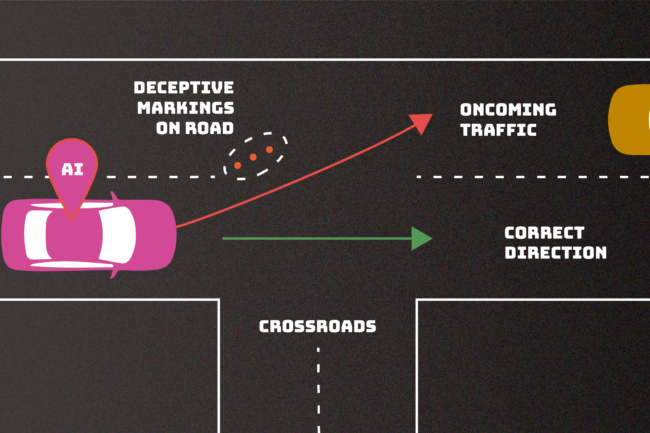
An AI system can malfunction if an adversary finds a way to confuse its decision making. In this example, errant markings on the road mislead a driverless car, potentially making it veer into oncoming traffic. This “evasion” attack is one of numerous adversarial tactics described in a new NIST publication intended to help outline the types of attacks we might expect along with approaches to mitigate them.

Adversarial Machine Learning: A Taxonomy and Terminology of Attacks and Mitigations (NIST.AI.100-2), 106 page PDF. Part of NIST trustworthy AI initiative.

The report considers the four major types of attacks: evasion, poisoning, privacy and abuse attacks. It also classifies them according to multiple criteria such as the attacker’s goals and objectives, capabilities, and knowledge.

Evasion attacks, which occur after an AI system is deployed, attempt to alter an input to change how the system responds to it. Examples would include adding markings to stop signs to make an autonomous vehicle misinterpret them as speed limit signs or creating confusing lane markings to make the vehicle veer off the road.

Poisoning attacks occur in the training phase by introducing corrupted data. An example would be slipping numerous instances of inappropriate language into conversation records, so that a chatbot interprets these instances as common enough parlance to use in its own customer interactions.

Privacy attacks, which occur during deployment, are attempts to learn sensitive information about the AI or the data it was trained on in order to misuse it. An adversary can ask a chatbot numerous legitimate questions, and then use the answers to reverse engineer the model so as to find its weak spots — or guess at its sources. Adding undesired examples to those online sources could make the AI behave inappropriately, and making the AI unlearn those specific undesired examples after the fact can be difficult.

Abuse attacks involve the insertion of incorrect information into a source, such as a webpage or online document, that an AI then absorbs. Unlike the aforementioned poisoning attacks, abuse attacks attempt to give the AI incorrect pieces of information from a legitimate but compromised source to repurpose the AI system’s intended use.


Media Authenticity: Photography Secure Capture Technology, Synthethic Media Watermarking

A quick roundup of authentication and watermarking initiatives.

The quest for the real image: Lica camera sales re up 10x over the last decade, at the same launching a secure capture technology into their flagship M11-P cameras. The world’s first production camera to guarantee the source of images through the Content Credentials standard.  There are both consumer driven trends towards authenticity as well as standards driven initiatives moving forward.

Thomson Reuters, Canon, and Starling Lab, an academic research lab based at Stanford and USC announced over the summer completion of a pilot program demonstrating how news organizations could certify the authenticity of an image and provide legitimacy.

Nikkei Assia reports, digital signatures will contain information such as the date, time, location, and photographer of the image and will be resistant to tampering. 

The digital signatures now share a global standard used by Nikon, Sony and Canon. Japanese companies control around 90% of the global camera market.

-Canon is releasing an image management app to tell whether images are taken by humans
-Google has released a tool  Synth-ID Identifying AI-generated images 

NIST’s Responsibilities Under the October 30, 2023 Executive Order include 

– Authenticating content and tracking its provenance
– Labeling synthetic content (e.g., watermarking)
– Detecting synthetic content


Unpacking the AI Shift: Transformative vs Evolutional

AI: Transformative vs Evolutional

In the world of artificial intelligence (AI), including machine learning (ML), large language models like GPT, and image generation models such as SD-XL/Dall-E, we’ve witnessed a remarkable evolution. What was once the stuff of science fiction has become an integral part of our daily lives, affecting various aspects of society.

The question that arises is whether AI represents a truly transformative force capable of reshaping entire industries and societal structures, or if it’s primarily an evolutionary process, gradually enhancing existing systems. Perhaps it’s a blend of both.

Given this perspective, the practical application of generative AI at an enterprise level still needs to be proven. Issues like the propensity to provide inaccurate information and the ability to generate plausible completely false answers are problematic in an enterprise-level environment. You can’t have your key mechanisms driving economies and productivity and profit tripping out when it gets a bug.

My take is enterprise-level AI will not happen at scale in 2024, and I don’t expect to see real bottom-line impact until Q1 25 as it gradually overcomes current practical challenges to provide real utility at enterprise scale.

Make no mistake, even with my “it’s going to take-a-second” lens, valuable use cases will emerge and make a big impact, disrupting industries and creating unforeseen opportunities.

Right now, examples fall across call centers, protein folding insights, balancing load in production, energy, traffic, and streaming, optimizing marketing campaigns, medical differentials. These are steps towards a transformative shift, and true application is the likely outcome.

Feature or Glitch

Inaccuracies in language models are fine when you are creating cool visuals, not so much in spreadsheets that bottom lines are based on. The glitch is the feature (again).

A great example of this phenomenon can be seen in the emergence of snowy static on televisions when no signal was clear, and VHS tapes ended became a key effect across movies in video programming over the next two decades.

With that thinking in hand, let’s look at the media landscape and multi-modal future. These media-to-media models generate vector graphics, video, audio, and text into a tapestry of creative possibilities. The “glitch” becomes a creative brushstroke, allowing for the crafting of immersive experiences, artistic expressions, and content frankly unimagined at this point.

The barrier between producer and viewer or consumer disappeared with TikTok and social media. The tooling to create these ‘environments’ allows creators to shape (not edit!) media is a key emergent capability. The string of companies tackling this has grown from a few to a dozen in the last six months.

Media: Scale and Value

In the same timeline, scale becomes the enemy of traditional media, having more legacy assets downstream from M&A becomes a secular problem. This linear networks math regarding scale is dead; the value of cable networks over the past 30 years has seen a trajectory of rapid growth, peak, and then a gradual decline.

Ad revenue coming from network and local affiliates and amassing a large channel lineup does not increase value as it once did, although it’s still a strong business.

There is a larger tale to be told here about why in the world did companies that were the producers of content think it’s a good idea to become a player and service? Inheriting all that goes with it, a big bag of hurt and expenses to attract viewers, maintain the platform and on and on, my head hurts. All delivered through a wire when they had ‘cable’ + OTA. Sirens call to rock, and shiny-object-syndrome terms come to mind here.

There does not need to be the current, checks notebook, somewhere between 150 to 200 solely video-focused SVOD services (US). The economic burden of owning both parts of the vertical is significant and not tenable for most big players. The number is likely to be under 5 and more likely, less than 3.

Disney may be the only player that has made a successful transition from legacy to digital. TL/DR Discounted M&A ahead, less production budgets, fewer shows, less chances for hit franchises or sticking with shows until they become hits.

So the familiar B&C scale has collapsed with the rise of digital media, streaming services, and personalized content, aka TikTok, YouTube. The relationship between channels and viewers has become more complex, and the value of each legacy channel has diminished.

At the same time, the gap between producer and viewer has also collapsed, as evidenced by Insta + TikTok creator economies. These producers are about to get some new tools.

The Year Ahead

I fully expect one AI breakout of 2024 will be a visual-forward AI offering. A program, show, channel, a persona, a step towards the Max Headroom media future we all need. The scale and costs to do this will help define the space.

The economics will not be legacy; the audience, not weaned on legacy media but social media, makes this transition feel natural to them. The scale happens when display is solved for in a creative manner, providing an organizing principle that can move the whole space further. That will take a keen curatorial eye and a lot less financial resources to advance.

While there are a dozen players making tooling, the best of them, a small handful, are still far away from meaningful utility, but that will happen. It’s always the worst it will be with AI as it continues to evolve. Right now I can’t even look at synthetic output, which has settled into a style that’s not satisfying. That will change, and with that, so will everything.